
Crowns & Bridges in Beverly Hills, CA
Medically reviewed by Dr. Kayla Lebeau, DDS
Crowns and bridges, and when you actually need one
A crown covers a tooth completely. It is the right answer when so much tooth has been lost that a filling would simply break out, after a large old restoration fails, after root canal treatment on a back tooth, or when a tooth has cracked.
It is not the right answer for a small cavity, and it should not be the automatic answer for a discolored front tooth. A filling, an onlay or a veneer may keep far more of your own tooth. We will tell you which applies to yours.
- Usually takesTwo visits, about two weeks apart
- NumbingLocal anesthetic
- TemporaryAlways, never a bare tooth
- LifespanCommonly 10 to 15 years
A crown is usually advised when
- More than about half the biting surface is gone
- A tooth has cracked, or hurts sharply when you release a bite
- A back tooth has had root canal treatment and needs protecting from splitting
- An old crown has decay underneath it or the margin is open
- A tooth is badly worn down by grinding
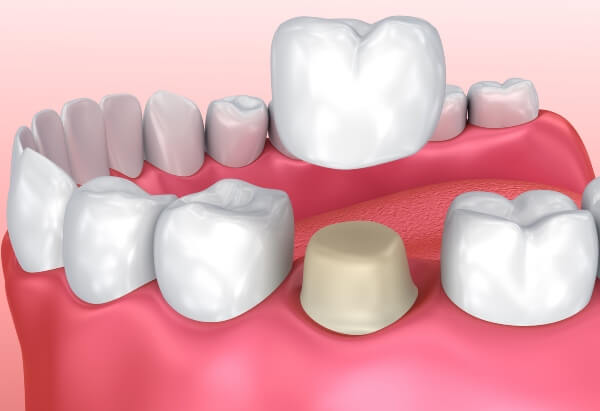
The two appointments
- Shaping the toothUnder local anesthetic, the decay and any failing filling come out first. What is left is shaped so the crown fits over it with even thickness. Too little reduction and the crown looks bulky, too much and the tooth is weakened.
- RecordsA scan or impression of the prepared tooth, the tooth above it and how you bite together. The bite is the part people underestimate; a crown a fraction high will ache for months.
- Color matchingDone in natural light against the neighboring teeth, and matched to the tooth beside it rather than to a chart.
- A temporary crownYou leave with a working tooth. It is deliberately easy to remove, so treat it gently and avoid pulling floss up through the contact.
- FittingWe try it in, check the contacts, the bite and the appearance with you holding a mirror, and only then cement it. If something is not right, it goes back to the lab.
Materials, in plain terms
- All-ceramic and zirconia. No metal line at the gum, and now strong enough for back teeth. This is the usual choice.
- Layered porcelain. The most lifelike for front teeth, where translucency at the edge is what stops a crown looking flat.
- Gold. Still the kindest material to the opposing tooth and extremely durable. Some people want it at the back, and they are not wrong.

Bridges, and the honest comparison with an implant
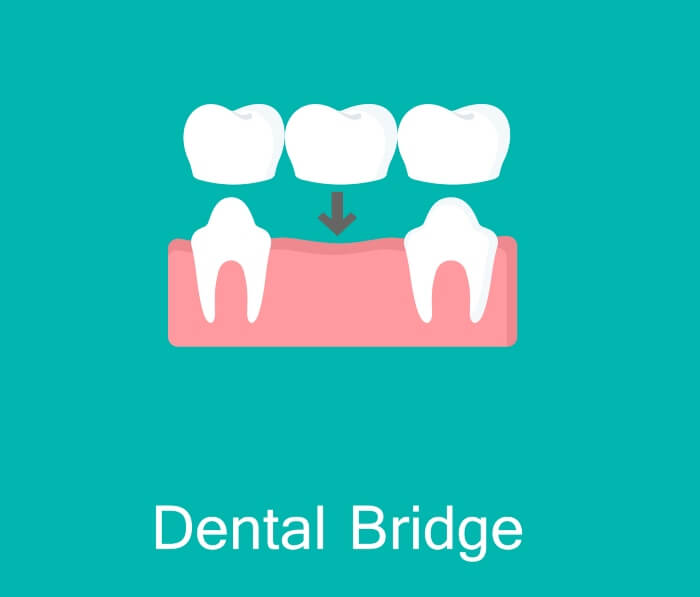
A bridge fills a gap by joining to the teeth either side, which have to be crowned to carry it. It is fixed, it does not come out, and it is usually quicker than an implant.
The trade-off is real and we would rather you hear it before you decide. To place a bridge we have to cut down two teeth that may be perfectly healthy. An implant leaves them untouched and preserves the bone where the root was, but it costs more and takes months. A bridge is often the better answer when the neighboring teeth already need crowns anyway, or when there is not enough bone for an implant and you would rather not have a graft.
Does having a crown hurt?
The appointment is done under local anesthetic, so no. The tooth can be sensitive to cold for a week or two afterwards while it settles.
How long do they last?
Ten to fifteen years is typical, and many last far longer. What ends a crown is usually decay at the edge or gum disease underneath. Both of which are about cleaning, not about the crown itself.
Can you tell it is a crown?
On a front tooth, done well, no. Getting that right depends on the color match and the way light passes through the edge, which is why we check it with you in daylight before it is cemented.
What if my temporary comes off?
Keep it, call us, and do not chew on that side. It is a nuisance rather than an emergency, but the tooth can drift within days, so do not leave it a week.
Can I whiten a crown?
No. Porcelain does not change color with whitening gel. If you are planning to whiten, do it first and we will match the crown to the shade you end up with.
Do I still need to floss it?
Absolutely, and around a bridge especially. Decay at the margin is the most common reason a good crown fails.
Find out whether you need a crown at all
- (310) 860-6969Someone here answers.
- Request a visitWe will call to confirm.
- Pick a time onlineChoose your own slot.
When a tooth needs a crown rather than a filling
The dividing line is structural, not cosmetic. A filling sits inside the tooth and relies on the walls around it. A crown wraps the tooth and holds those walls together.
A crown becomes the right answer when:
- More than roughly half the tooth is filling rather than tooth
- A cusp has broken off, or the tooth is cracked
- It has had a root canal and is a back tooth
- An old large filling is failing, and replacing it with another large filling would leave paper-thin walls
There is a real middle ground people are not always offered. An inlay or onlay repairs the damaged part and keeps the healthy walls intact, where a crown would remove sound tooth all the way around. If yours is a borderline case, we will offer that comparison rather than defaulting to the larger option.
What crowns are made from
The material is chosen for where the tooth sits and how hard you bite, not for preference. Back teeth take the force; front teeth are judged on appearance. Here is the honest trade-off for each.
All-ceramic and all-porcelain
The closest match to a natural tooth, because light passes through the material the way it does through enamel. Our default for anything that shows when you smile, and the option for anyone with a metal sensitivity. Modern ceramics are strong, though a heavy grinding habit still argues for something tougher at the back.
Zirconia
The toughest tooth-colored option, which makes it the usual answer for molars and for patients who grind. Slightly less translucent than porcelain, so it is chosen for strength first. It can be layered at the front edge where appearance matters.
Porcelain fused to metal
A metal core for strength with porcelain over the top. Reliable and long-serving, but the porcelain can chip off the metal over the years, and a dark line can appear at the gum as gums recede. We use it less than we used to, for those reasons.
Gold and other metals
The longest-lasting material we have, and the kindest to the opposing tooth because it wears at a similar rate. It is unmistakably metal, so it is a back-tooth option. Some patients specifically ask for it and they are not wrong to.
Temporary crowns
Acrylic or resin, made to protect the tooth for the two to three weeks while the permanent crown is built. They are meant to come off, so treat them gently and avoid anything sticky. They are not a cheaper permanent option.
What the appointments involve
Visit one. The tooth is numbed and shaped so the crown has room to sit without being bulky. We scan or take an impression, choose the shade in natural light, and fit a temporary. This visit takes an hour or two depending on how many teeth.
Between visits. Two to three weeks while the crown is made. Your temporary is deliberately weakly cemented so it can be removed easily, so avoid anything sticky, and floss out sideways rather than up.
Visit two. The temporary comes off, the crown is tried in, and we check the fit at the margin, the contact with the teeth either side, the shade in daylight, and the bite. Only then is it cemented.
Speak up at the try-in. Shape and shade can be adjusted or remade at that stage. After cementing, changes mean starting again.
Making a crown last
A well-made crown commonly lasts 10 to 15 years and frequently much longer. What ends most of them is not the porcelain failing. It is decay in the tooth underneath, at the margin where crown meets tooth.
- Clean the margin properly. Brush right at the gum line and clean between the teeth daily. This is where crowns are lost.
- Wear a night guard if you grind. Grinding fractures porcelain and loosens cement.
- No ice, no pens, no opening packaging.
- Keep your check-ups. Decay under a crown is invisible to you and often painless, because a root-treated tooth cannot warn you. It shows on an X-ray.
If a crown comes off intact and the tooth is not painful, keep it, do not superglue it, and call us. It can often be re-cemented.
A case from our own practice
A patient came to us after a fall, with a fractured front tooth and a cut lip still fresh from the accident. The tooth was rebuilt with a custom zirconia crown across two visits.