
Sedation Dentistry in Beverly Hills CA
Medically reviewed by Dr. Kayla Lebeau, DDS
If fear is why you have not been in years, this is the page that matters
Dental anxiety is common, it is not something to be embarrassed about, and it is usually the result of one bad experience that everything since has been measured against. The cost of avoiding it is that small problems become large ones, which then need exactly the treatment you were dreading.
Sedation breaks that loop. It ranges from something that simply takes the edge off, to sleeping through the appointment entirely and remembering none of it.
Tell us when you book. Not on the day, in the chair, when everything is already set up.
- OptionsNitrous oxide, oral sedation, IV sedation
- AwakeYes for most, and responsive throughout
- Memory of itLittle or none
- Ride homeRequired for everything except nitrous
Sedation is worth discussing if
- You have avoided the dentist for years because of fear
- You have a strong gag reflex that makes treatment difficult
- You have trouble getting numb with local anesthetic alone
- You need a long appointment, or several procedures combined into one
- You cannot sit comfortably for long, or you have a movement disorder
- Sounds and smells of a dental office trigger real distress
The three levels, honestly compared
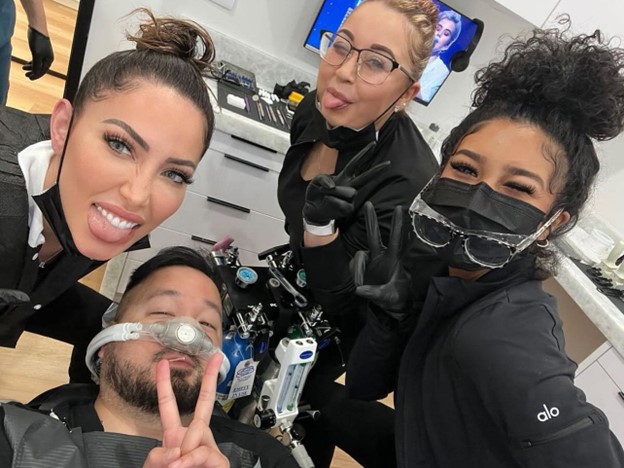
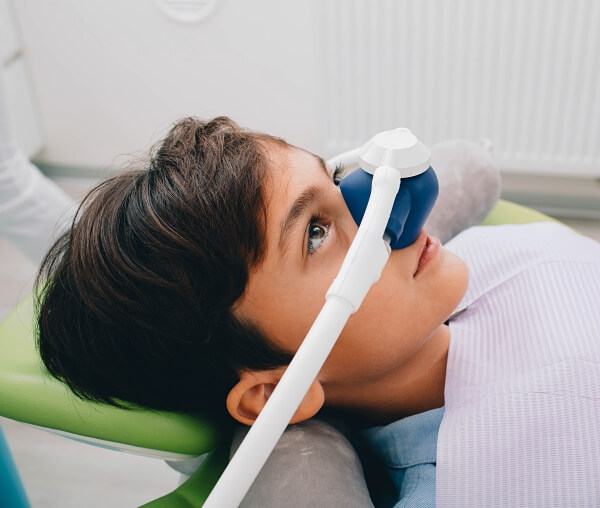
- Nitrous oxide. “laughing gas.” Breathed through a small nose piece. Takes effect in a few minutes, wears off within about five minutes of the mask coming off. You stay fully awake and aware, just considerably less bothered. You can drive yourself home. Best for mild to moderate anxiety, and it is the usual choice for children.
- Oral sedation. A tablet taken before the appointment. You are drowsy and deeply relaxed, still able to respond, and most people remember very little afterwards. You need someone to bring you and take you home, and you will be groggy for the rest of the day.
- IV sedation. Given through a vein, so the level is adjusted precisely during treatment. This is the deepest option short of general anesthesia. Most people have no memory of the procedure at all. A ride home is essential, and you will need the day off.
- A conversation firstYour full medical history, every medication and supplement, and what specifically frightens you. Some fears are about pain, some about the needle, some about loss of control, and they have different answers.
- Choosing the levelMatched to the procedure and to you. We would rather use the lightest option that works than the deepest one available.
- Instructions beforehandFasting requirements for oral and IV sedation, which medications to take or hold, and confirming who is driving you.
- Monitoring throughoutOxygen level, pulse and blood pressure watched continuously for oral and IV sedation. You remain able to respond even when you will not recall it.
- RecoveryYou rest until you are steady, and your companion takes you home with written aftercare instructions.
Being sedated is not the only thing that helps
Plenty of anxious people get through treatment comfortably without any sedation at all, once the appointment is run differently.
- An agreed stop signal. Raise your hand and everything stops. Knowing you can stop it is often what makes it bearable.
- A first visit with no treatment. Just talking, sitting in the chair, and looking. Nothing else.
- Being told before each step, or deliberately not being told, depending on which you prefer.
- Headphones and your own music. The sounds are a large part of it for many people.
- Morning appointments, so you are not spending the whole day anticipating it.
Will I be unconscious?
Not with these options. Nitrous, oral and IV sedation all leave you able to respond, breathing on your own. What changes is how relaxed you are and how much you remember afterwards.
Is it safe?
These are well-established techniques with a strong safety record when a proper medical history is taken and you are monitored throughout. That is why the health questions before the appointment are not a formality.
Will I remember anything?
With nitrous, yes. With oral sedation, patchy fragments at most. With IV sedation, usually nothing at all.
Can I drive myself home?
After nitrous, yes, once it has cleared. After oral or IV sedation, absolutely not. You need someone with you, and you should not work or make decisions for the rest of the day.
Can children have sedation?
Nitrous oxide is commonly used for children and works well. Anything deeper is assessed case by case.
Will I still need the numbing injection?
Yes, for most treatment. Sedation manages anxiety; local anesthetic manages sensation. Under sedation you generally will not mind or remember the injection.
What if I am on medication or have a health condition?
Tell us everything, including supplements. Some interact with sedatives. That information determines which option is safe for you.
Start with a conversation, not treatment
- (310) 860-6969Someone here answers.
- Request a visitWe will call to confirm.
- Pick a time onlineChoose your own slot.
Sedation is not general anesthesia
This is the confusion worth clearing up first. You are not unconscious. You breathe on your own, you can respond when spoken to, and you can tell us if something is uncomfortable.
What changes is how much you care. Anxiety drops away, and with the oral and IV options most people remember very little of the appointment afterward, not because they were unconscious, but because those medications interfere with forming new memories.
Sedation also does not replace local anesthetic. The tooth still gets numbed; sedation handles the fear and the awareness, the local handles the sensation. You need both, and that is true at every level below.
The three levels, plainly
Nitrous oxide. Breathed through a small nose piece. Takes effect in minutes, wears off in minutes, and you drive yourself home. Best for moderate nerves and shorter appointments. It is the one to try first, because it costs you nothing in recovery time.
Oral sedation. A tablet taken before you arrive. Deeper and longer, and you will be drowsy for much of the day. You need someone to bring you and take you home, and you cannot drive. Most people remember little of the visit.
IV sedation. Delivered through a vein, which means the level can be adjusted moment to moment rather than waiting on a tablet. The deepest option, used for long procedures, difficult surgery, or severe phobia. Escort required, and the rest of the day is written off.
We start at the lightest level that will work for you, not the deepest you will accept.
At S&C Dental Beverly Hills, we offer several sedation options:

Good reasons to ask for it
- You have been avoiding the dentist for years. This is the most common reason and the best one. Sedation is how a long avoidance gets broken.
- A strong gag reflex that makes X-rays, impressions or back-tooth work impossible.
- You go numb slowly, or local anesthetic has not worked well for you before.
- A lot of treatment to get through. Several appointments can often be combined into one longer sedated visit.
- You cannot sit still or keep your mouth open comfortably for long. Jaw problems, back pain, movement disorders.
- A bad experience in the past. Entirely legitimate. Nobody here needs it explained or justified.
What it costs
Sedation is priced separately from the dental work, and largely by time, since it is a clinician and monitoring for the length of the appointment.
Nitrous oxide is the least expensive by a wide margin and is often a small addition to the visit. Oral sedation sits in the middle. IV sedation is the most expensive because it requires dedicated monitoring throughout.
Insurance coverage is inconsistent. Plans are more likely to contribute when sedation is tied to surgical treatment such as extractions than when it is for anxiety alone, though a documented phobia sometimes qualifies. We check your specific plan and tell you the expected out-of-pocket figure before the appointment, never after.
One genuine offset: combining several appointments into one sedated visit can cost less overall than attending separately, and it is easier on you. Ask us to price both ways.
Children and sedation
Children are sedated differently from adults, and more cautiously. Airways are smaller, doses are weight-based, and the margin for error is narrower.
Nitrous oxide is the usual and much the safest choice for an anxious child. It is gentle, it wears off completely before they leave, and for most children it is enough to turn an impossible appointment into an ordinary one.
Deeper sedation for a child is a specialist decision, and for very young children or extensive treatment the right answer is often a pediatric specialist or a hospital setting rather than a general practice. We will say so when that applies.
What helps more than any drug: bringing them along to your appointments first so the office is familiar, and not using the words that make it frightening. Avoid promising it will not hurt. Promise instead that they can raise a hand and we will stop.