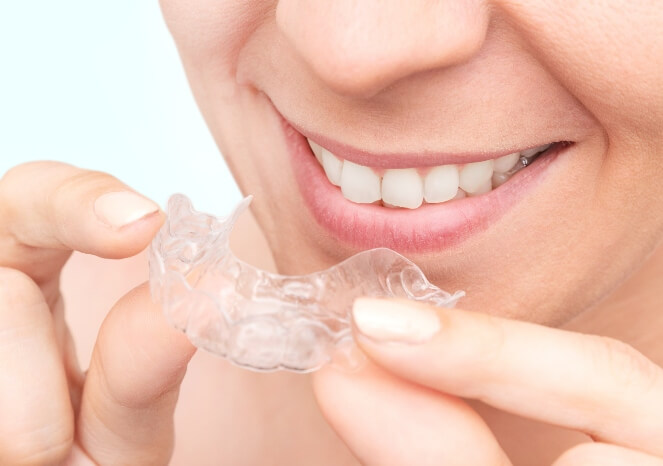
Mouth Guards in Beverly Hills CA
Medically reviewed by Dr. Kayla Lebeau, DDS
Two different problems, two different guards
People use “mouth guard” for two unrelated appliances, and getting them confused is expensive. A sports guard absorbs impact and protects teeth from being broken or knocked out. A night guard protects teeth from your own jaw muscles while you sleep. See grinding and clenching.
They are made of different materials, in different thicknesses, and one will not do the other’s job. A soft sports guard worn at night can actually make clenching worse, because it gives the muscles something satisfying to bite into.
- TakesTwo visits
- Custom fitYes, from your own impressions
- Sports guardAbsorbs impact
- Night guardProtects against grinding
You need a custom guard if
- You or your child play contact or stick sports. Basketball, football, hockey, martial arts, skateboarding
- You wake with a sore jaw, headaches at the temples, or aching teeth
- Your teeth are visibly flattening, chipping at the edges, or becoming sensitive
- You have had veneers, crowns or implants and want to protect the investment
- A partner has told you that you grind in your sleep
Why the drugstore version is not the same thing
A boil-and-bite guard is better than nothing on a sports field, and that is the strongest case for it. It is bulky, it makes breathing and speech harder, and it stays in place only if you keep your teeth clenched on it, which is precisely what people do not do during a game.
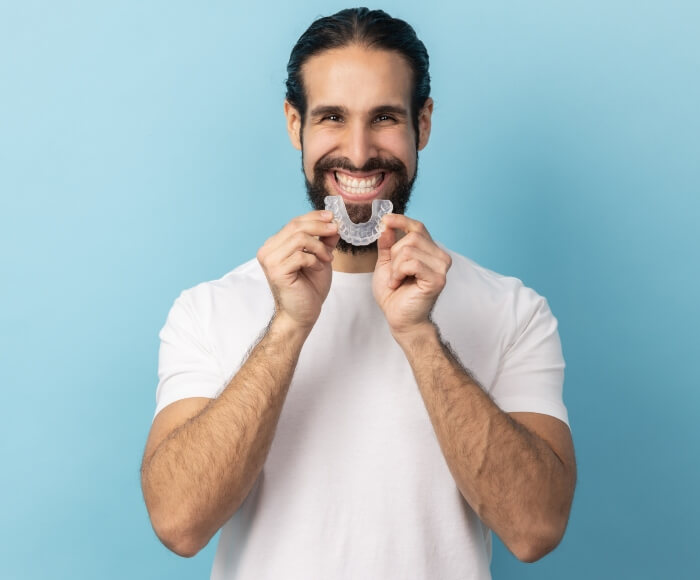
A custom guard is made on a model of your own teeth. It is thinner where thinness is fine and thick where impact lands, it stays put without being held, and you can talk in it. For a night guard the difference is bigger still, because the whole point is a precise, even bite across every tooth. An ill-fitting night guard loads a few teeth heavily and can move them.
- AssessmentFor a night guard we look at your wear patterns, your jaw joint and muscles first, because the guard is protection, not treatment for the cause.
- Scan or impressionA digital scan or impression of both arches, plus a record of how your jaw closes.
- Made to your biteThickness and material chosen for the purpose, a hard acrylic night guard, a laminated sports guard, or a dual-laminate for people who need both comfort and durability.
- Fitting and adjustingWe check it seats fully, that the contact is even across every tooth, and that nothing is high. Even contact is the entire point.
- ReviewA check a few weeks later once you have actually slept in it or played in it.
Looking after it
- Rinse in cold water after every use and brush it gently with soap, not toothpaste. Toothpaste scratches it.
- Never leave it in hot water, a hot car, or the dishwasher. Heat distorts it and a distorted guard no longer fits.
- Store it dry, in its case, with the lid vented. Dogs eat these more often than you would imagine.
- Bring it to your check-ups so we can inspect it for wear and confirm it still fits.
- Children need replacements as teeth erupt and jaws grow, usually each season.
How long does one last?
A night guard, several years with care, though heavy grinders wear through them faster, and that wear is useful information about how hard you are actually grinding. A child’s sports guard usually lasts a season.
Will it stop me grinding?
No, and no guard does. Grinding is largely driven by sleep and stress. The guard protects your teeth from the force, which is what prevents the cracked teeth and the flattened edges.
Is it uncomfortable to sleep in?
It feels strange for a few nights. Most people adapt within a week or two. If it is genuinely uncomfortable, it needs adjusting rather than enduring.
Can I wear a night guard with braces or aligners?
Tell us what you are wearing and we will design around it. If you are in Invisalign, the aligners themselves already cover the teeth.
Are they covered by insurance?
Night guards often are, at least partly, when there is documented wear. We will check your plan before you commit.
Do I need upper or lower?
Usually upper, but lower guards suit some people better, particularly if you gag easily. Either can be made to work.
Get one made for your mouth, not a boiled tray
- (310) 860-6969Someone here answers.
- Request a visitWe will call to confirm.
- Pick a time onlineChoose your own slot.
Custom guards for children
Two different appliances get called mouth guards, and children need the sport one far more often than the night one.
For sport: a custom guard is worth the difference over a boil-and-bite version for one practical reason. It stays put and it is comfortable, so it actually gets worn. A guard in the sports bag protects nothing. It also needs remaking as they grow and as adult teeth come through, usually every season or two.
For grinding: children grind commonly, and in most cases it resolves on its own without treatment. We are cautious about night guards in a growing mouth because an appliance can interfere with normal jaw development. We monitor rather than automatically treat, and we look at the airway, since breathing during sleep is a frequent driver in children.
If your child grinds loudly, snores, or wakes unrefreshed, mention it. That combination is worth investigating properly.