
Gingivitis Diagnosis and Treatment in Beverly Hills, CA
Medically reviewed by Dr. Kayla Lebeau, DDS
The one stage of gum disease that fully reverses
Gingivitis is inflammation of the gum only. The bone holding your teeth has not been touched yet. Treat it now and your gums return to genuinely healthy. No lasting damage, nothing lost.
Leave it and it becomes periodontitis, where the bone starts to go. That stage can be stopped and controlled, but what has been lost does not come back. The entire difference between those two outcomes is how early someone acts.
The most useful thing to know: healthy gums do not bleed. Not when you brush, not when you floss, not a little bit. Bleeding is not a sign you brushed too hard. It is a sign of inflammation.
- ReversibleYes, completely
- Usually takesOne cleaning, then 2 weeks
- NumbingNot normally needed
- Re-checkAbout 6 weeks
Signs of gingivitis
- Pink in the sink, or blood on the floss
- Gums that look red and puffy rather than firm and pale
- Tenderness when brushing along the gum line
- Bad breath that comes back quickly after brushing
- Gums that feel slightly swollen or itchy
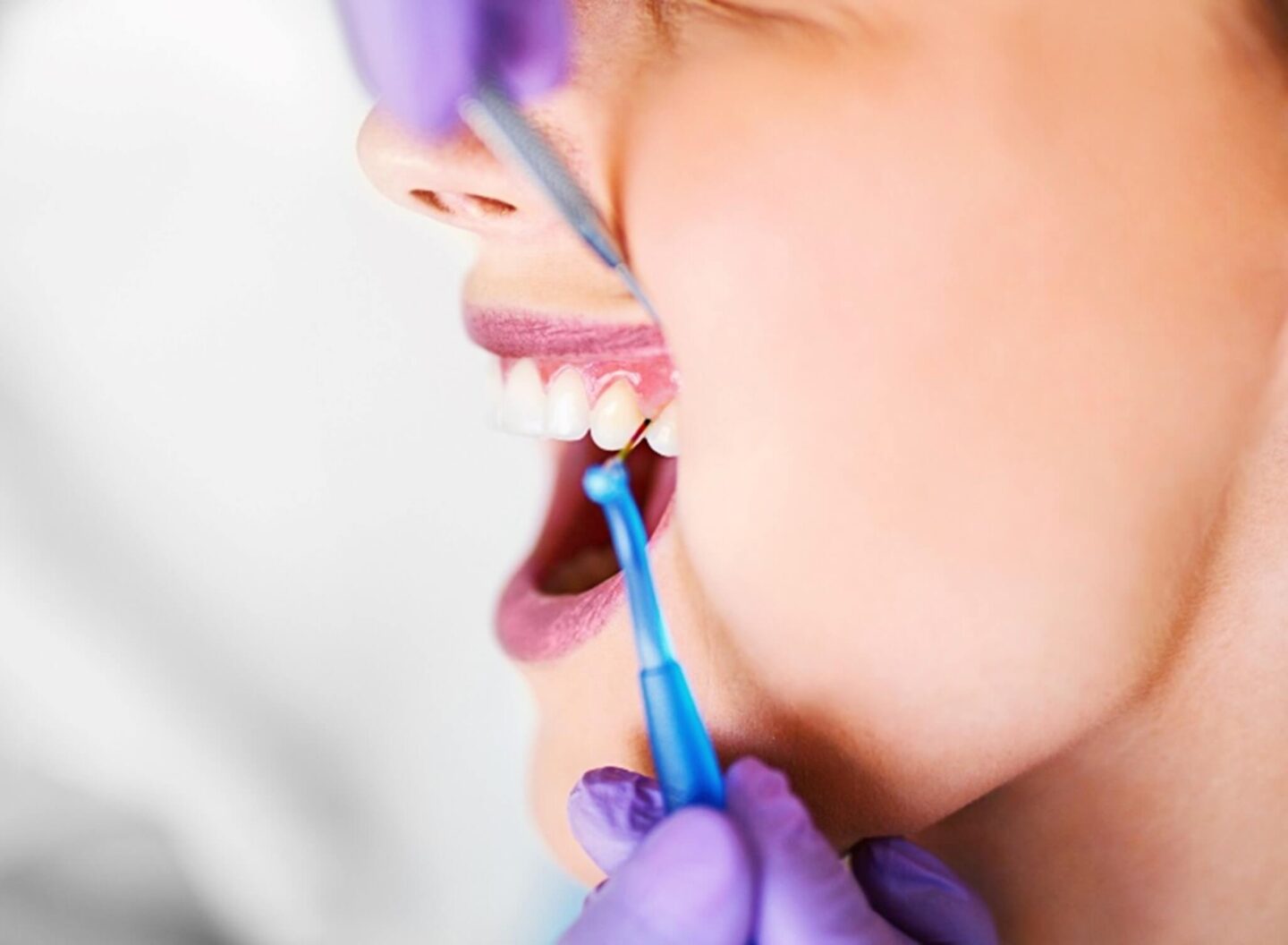
Treating it
- Charting to confirm the stageWe measure pocket depths and take X-rays if needed. This is what distinguishes gingivitis from early periodontitis, and it changes the treatment entirely. Guessing is not good enough here.
- A thorough cleaningPlaque and hardened tartar are removed from around the gum line. This alone resolves a large proportion of cases, because it removes what the gums are reacting to.
- Finding out why it happenedWhich specific areas you are missing, whether a crowded tooth is impossible to clean, whether a filling has an overhanging edge trapping plaque, whether a medication is causing dry mouth.
- Fixing your techniqueNot a lecture, a demonstration in your own mouth with a mirror. Angle the brush into the gum line at 45 degrees, and clean between the teeth daily. Two changes, and they matter more than which toothpaste you buy.
- A re-checkSix weeks later. Gums that have stopped bleeding are the proof. If they have not, we look again for what is being missed.
The two weeks that decide it
Gingivitis responds to daily cleaning faster than almost anything in medicine. Clean thoroughly along the gum line and between the teeth every day and inflammation usually resolves within about two weeks. Stop, and it returns just as fast.
- Clean between your teeth once a day. Floss or interdental brushes. Whichever you will actually use. Brushing alone reaches roughly 60% of each tooth.
- Expect a little bleeding for the first few days when you start cleaning properly. It is inflamed tissue, and it stops as the gums heal. Do not take it as a reason to stop.
- Two minutes, twice a day, angled into the gum line. Most people brush for under 45 seconds.
- Soft bristles. Hard brushing damages gums and does not clean better.
- Mouthwash is optional and never a substitute. It does not remove plaque; it just makes your mouth taste clean.
Will my gums go back to normal?
Yes. That is the defining feature of gingivitis. No bone has been lost, so full recovery is the expected outcome.
Why do my gums bleed when I floss?
Because they are inflamed, not because flossing is harming them. Keep going gently and the bleeding stops within a week or two.
Can I treat it at home?
Improved cleaning resolves mild cases. But once tartar has hardened at the gum line, it cannot be brushed off. It needs removing professionally, or the gums keep reacting to it.
How do I know it has not become something worse?
Only by measurement. Pocket depths and bone levels distinguish gingivitis from periodontitis, and you cannot tell the difference by looking.
Does pregnancy affect it?
Yes. Hormonal changes make gums react more strongly to the same plaque, so pregnancy gingivitis is common. It is worth treating, as gum inflammation in pregnancy has been linked to poorer outcomes.
What if it keeps coming back?
Then something specific is trapping plaque, or the cleaning is missing the same spot each time. We find the cause rather than repeating the cleaning.
Catch it while it is still fully reversible
- (310) 860-6969Someone here answers.
- Request a visitWe will call to confirm.
- Pick a time onlineChoose your own slot.
The one thing that makes gingivitis different
It is completely reversible. That is not encouragement. It is the actual clinical distinction, and it is why this page exists separately from periodontal disease.
In gingivitis the inflammation is confined to the gum. The fibers and bone holding your teeth are untouched. Remove the plaque at the gum line and the tissue returns to normal, usually within one to two weeks, with nothing lost.
Once inflammation passes into the bone, that changes. Bone does not grow back on its own, pockets form, and treatment moves from cure to control for life.
Nobody can tell you which side of that line you are on by looking in a mirror. It takes measuring the pockets around each tooth with a probe, plus X-rays. That measurement is the single most useful thing done at a check-up and it takes a few minutes.
Bleeding when you brush is not normal and is not a reason to brush more gently. It is the earliest sign, and the easiest point to fix.