
Dental Implants FAQs
Medically reviewed by Dr. Jonathan Peri, DDS, MD
Dental implants, answered honestly
Including the parts that get glossed over. How long it really takes, what makes them fail, and when they are not the right answer. For the overview, see dental implants.
- The implantA titanium root in the bone
- Healing3 to 6 months
- Success rateHigh, above 95% in healthy patients
- Biggest risk factorSmoking
The procedure and the timeline
How long does the whole thing take?
Usually three to six months from placement to the final tooth, because the bone has to fuse to the implant. If a graft is needed first, add several more months. Anyone promising a permanent tooth in a week is describing a temporary one.
Does it hurt?
Placing an implant is generally more comfortable than having a tooth taken out. It is done under local anesthetic with sedation if you want it. Expect soreness and some swelling for a few days.
Will I have a gap while it heals?
Not usually at the front. A temporary tooth, a bonded bridge or a removable one, keeps the space filled. Tell us if it is a visible tooth so we plan for it from the start.
Do I need a bone graft?
It depends entirely on how much bone you have, which a 3D scan measures precisely. Teeth missing for years usually mean bone loss. A graft placed at the time of extraction often prevents the need for a bigger one later.
Can implants be done the same day as an extraction?
Sometimes. Immediate placement works well in the right conditions. It requires enough bone, no active infection, and good initial stability. The scan and the state of the socket decide it, not preference.
Suitability, risks and failure
Am I too old for implants?
Age itself is not a barrier. Implants are routinely placed in people in their eighties. Bone quality, general health and healing matter, not the number.
What stops someone being a candidate?
Uncontrolled diabetes, heavy smoking, active gum disease, some bone medications such as certain bisphosphonates, and head or neck radiotherapy. Most of these are managed rather than absolute, but they must be disclosed. Growing teenagers wait until jaw growth is complete.
Does smoking really matter that much?
Yes, more than anything else you control. It significantly raises failure rates by impairing blood supply and healing. We will not pretend otherwise, and stopping even for the healing period measurably helps.
Why do implants fail?
Early failure means the bone did not fuse. Uncommon, and usually related to smoking, infection or poor initial stability. Late failure is nearly always peri-implantitis, which is gum disease around an implant, caused by plaque left at the gum line. Implants do not decay, but the gum and bone around them behave exactly like they do around teeth.
What happens if one fails?
It is removed, the site is allowed to heal and often grafted, and another can usually be placed a few months later. It is a setback, not the end of the plan.
Is the metal a problem?
Titanium is exceptionally well tolerated and has decades of use in orthopedics and dentistry. Genuine allergy is very rare. Ceramic implants exist as an alternative if you would prefer to avoid metal.

Living with implants, and the alternatives
How do I clean them?
Like teeth, and more carefully at the gum line. Brushing, plus interdental brushes or a water flosser under and around the crown. Professional cleaning on a schedule, usually every three months. Is what prevents peri-implantitis, which is far harder to treat than ordinary gum disease.
How long do they last?
The implant itself commonly lasts decades and often for life. The crown on top is the wearing part and may need replacing after ten to fifteen years. Longevity depends far more on cleaning and maintenance than on the brand of implant.
Will it feel like a real tooth?
Very close. You bite normally and it does not move. It has no ligament, so pressure sensation is slightly different. Most people stop noticing within weeks.
Will it look like a real tooth?
In skilled hands, yes. The difficult part on a front tooth is not the implant but the gum contour around it, which is why planning and sometimes gum grafting matter so much on visible teeth.
Implant, bridge or denture, which is better?
An implant preserves bone and leaves neighboring teeth untouched, and is usually the best long-term choice. A bridge is quicker and can suit you if the adjacent teeth already need crowns. A partial denture costs least and replaces several teeth at once. We will give you a straight recommendation with the trade-offs.
Can I replace all my teeth with implants?
Yes. All-on-4 supports a full fixed arch on four implants. Where the upper jaw has severe bone loss, zygomatic implants anchor in the cheekbone instead.
Does insurance cover implants?
Coverage varies considerably and many plans contribute to part of the treatment rather than all of it. We will check yours and give you the figures before you decide.
Start with a scan and a straight answer
- (310) 860-6969Someone here answers.
- Request a visitWe will call to confirm.
- Pick a time onlineChoose your own slot.
Cleaning an implant properly
An implant cannot decay, and that fact misleads people into relaxing. The bone and gum holding it can still be lost to infection, peri-implantitis, and it is the leading cause of late failure.
What matters:
- Brush as normal, twice a day, including right at the gum margin
- Clean between and around it daily. Interdental brushes or a water flosser usually suit implants better than string floss
- Keep your maintenance visits. We use instruments that will not scratch the implant surface; scratches give bacteria somewhere to hold
- Report any bleeding, tenderness or bad taste around it early. Peri-implantitis is far easier to arrest than to reverse
One thing implants do not need: whitening. The crown keeps the shade it was made in.
Risks, stated plainly
Implant placement is a surgical procedure and it would be dishonest to present it as trivial. The risks are well documented and mostly manageable:
- Infection at the site during healing. Uncommon, and usually treatable if reported early.
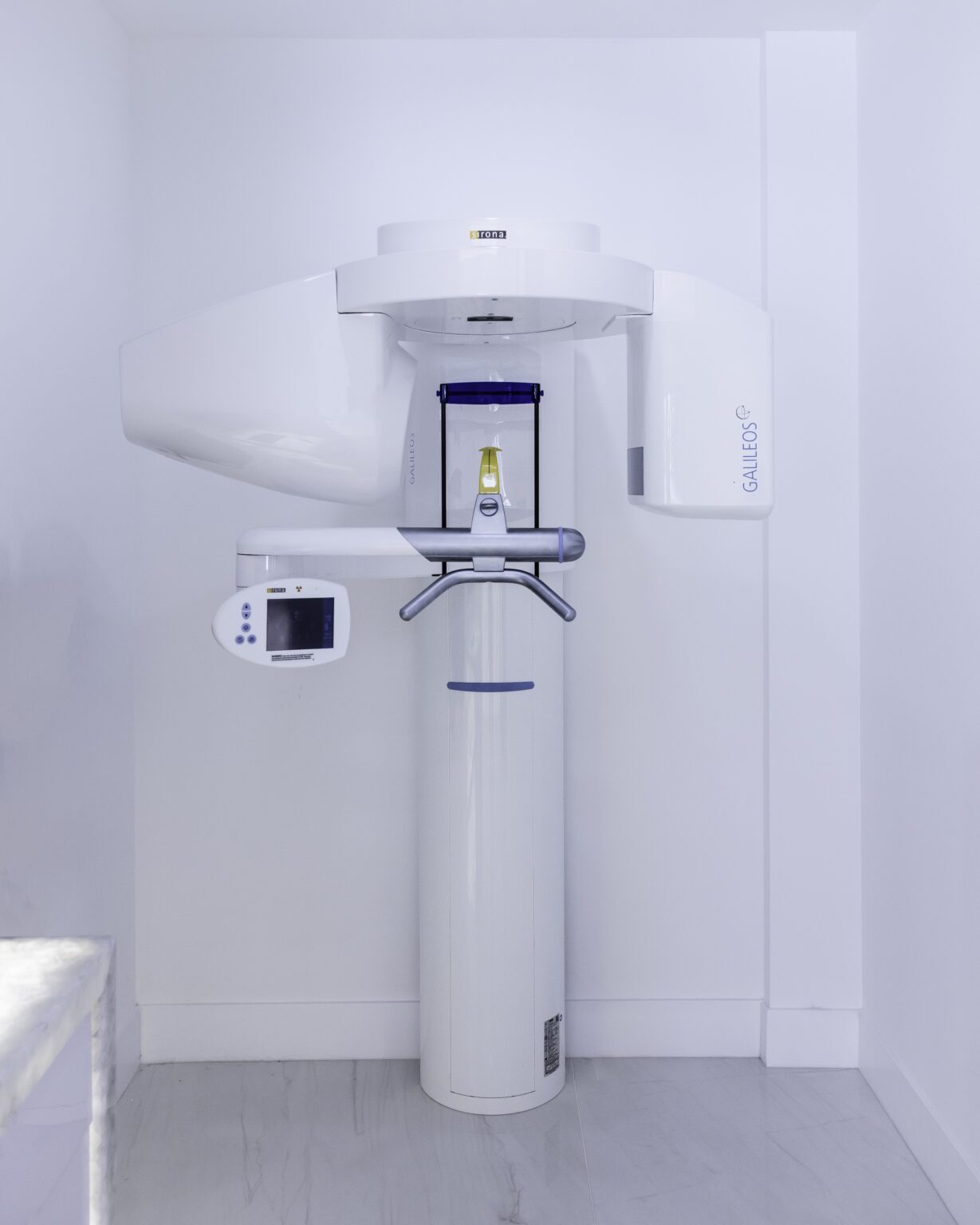
- Nerve involvement in the lower jaw, which can cause lasting numbness of the lip or chin. This is precisely why we scan in three dimensions and measure the distance to the nerve canal before deciding a position.
- Sinus complications in the upper back jaw, where the sinus floor sits close. Planned properly, a sinus lift solves it in advance.
- Failure to integrate. The bone does not bond to the implant. It is the most common failure and usually shows within the first months. The implant is removed, the site heals, and a second attempt often succeeds.
You will hear all of this at the consultation, not read it for the first time on a consent form.
The alternatives, compared fairly
An implant is usually the best option. It is not always the right one for the person in the chair.
A bridge is faster, a few weeks rather than months, and needs no surgery. The cost is that two healthy teeth either side get cut down to carry it, permanently. If those teeth already need crowns, that cost largely disappears and a bridge becomes genuinely sensible.
A partial denture is the least invasive and the least expensive, removable, and can be made quickly. It is also the least comfortable and does nothing to stop the bone shrinking underneath.
Leaving the gap is a real option for a back tooth you never show and can chew without. It is not free: the opposing tooth drifts down over years and the neighbors lean in. We will tell you when the gap genuinely does not matter.
Only implants replace the root, which is the only thing that keeps the bone underneath doing its job.