
Expert Snoring and Sleep Apnea Treatment in Beverly Hills, CA
Medically reviewed by Dr. Kayla Lebeau, DDS
Snoring is noise. Sleep apnea is a medical condition.
The difference matters more than almost anything else on this page. Snoring is the sound of a partly narrowed airway vibrating. Obstructive sleep apnea is the airway actually closing, repeatedly, so that breathing stops for seconds at a time, dozens or hundreds of times a night. Each time, oxygen drops and the brain briefly wakes you to restart breathing, which is why people with apnea can spend nine hours in bed and wake exhausted.
Untreated, it is associated with high blood pressure, heart disease, stroke, type 2 diabetes and a markedly increased risk of falling asleep at the wheel. It is worth taking seriously.
- DiagnosisA physician, by sleep study
- Our roleThe oral appliance, not the diagnosis
- ApplianceCustom, worn at night
- Best forSnoring, and mild to moderate apnea
Signs worth acting on
- Loud snoring, especially with pauses, gasping or choking sounds
- Someone has told you that you stop breathing in your sleep
- Waking unrefreshed, or falling asleep during the day
- Morning headaches, or a dry mouth and sore throat on waking
- Waking repeatedly to use the bathroom at night
- Difficulty concentrating, irritability, or low mood
- High blood pressure that is difficult to control
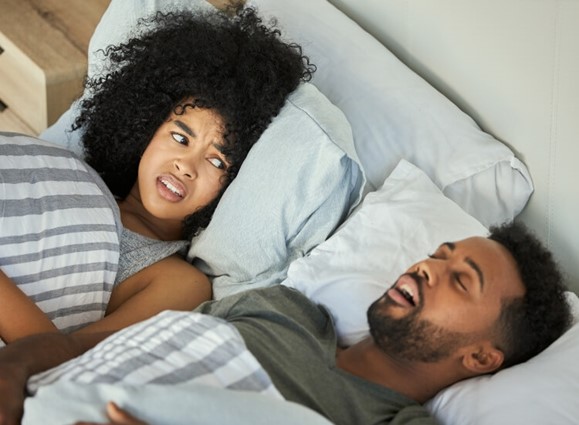
Where we fit, and where we do not
We do not diagnose sleep apnea. It is a medical diagnosis and it requires a sleep study interpreted by a physician. Either an overnight study or a home test.
What we do is make and manage the oral appliance, once you have that diagnosis. If you have symptoms and no diagnosis, our first step is helping you get one. Fitting an appliance for undiagnosed apnea can quiet the snoring while leaving the oxygen drops untreated, which is genuinely worse than doing nothing, the warning sign is silenced and the condition continues.
- Screening and referralWe go through your symptoms, examine your airway, tongue position, tonsils and jaw structure, and refer you for a sleep study where it is indicated.
- Reviewing your diagnosisWhat your study showed, how severe it is, and whether an oral appliance is appropriate or whether CPAP is the better recommendation. We will tell you honestly which one the evidence supports for your severity.
- RecordsDigital scans of both arches, plus a measurement of how far your lower jaw can comfortably move forward. Your jaw joint is examined first, because an existing joint problem changes the approach.
- FittingThe device holds the lower jaw slightly forward, which pulls the tongue base away from the back of the throat and keeps the airway open.
- TitrationThe advancement is increased gradually over several weeks to the smallest amount that resolves your symptoms. More is not better. It is just harder on the joint.
- Follow-up studyWhere apnea was diagnosed, a repeat sleep test with the appliance in confirms it is actually working. Feeling better is encouraging; a measurement is proof.
Things that help alongside an appliance
- Sleeping on your side. Apnea is often significantly worse on your back, and for some people position alone makes a measurable difference.
- Alcohol in the evening relaxes the airway muscles and reliably makes both snoring and apnea worse. So do sedatives.
- Weight loss helps where weight is a factor, and it is one of the few things that can reduce severity rather than only manage it.
- Treating nasal congestion. If you cannot breathe through your nose, you mouth-breathe, and the airway collapses more readily.
- Consistent sleep timing. Sleep deprivation deepens the muscle relaxation that causes the obstruction in the first place.
Is an oral appliance as good as CPAP?
For mild to moderate apnea, outcomes are comparable for many people, largely because appliances get worn every night and CPAP often does not. For severe apnea CPAP is more effective, and we will say so. An appliance is a good option for people who genuinely cannot tolerate CPAP.
Can I just get one online?
Please do not. Devices sold without a diagnosis, without fitting and without follow-up can move your teeth permanently and can mask untreated apnea. Both problems are expensive and one of them is dangerous.
Will it stop my snoring completely?
Most people see a substantial reduction, and many partners report it stops entirely. Results vary with anatomy, which is part of why we titrate gradually.
Will it change my bite?
Small bite changes are the recognized long-term risk with advancement devices. Regular review catches them early, and morning exercises reduce them. This is why ongoing monitoring is part of the treatment.
Does insurance cover it?
Medical insurance often covers oral appliance therapy for diagnosed sleep apnea. Frequently under medical rather than dental benefits. We will help you find out.
What if my apnea is severe?
CPAP is the recommended treatment, and we will say so plainly. In some cases an appliance is used in combination with it.
Start with an airway assessment
- (310) 860-6969Someone here answers.
- Request a visitWe will call to confirm.
- Pick a time onlineChoose your own slot.
Snoring and sleep apnea are not the same thing
Snoring is noise. Soft tissue vibrating as air squeezes past. Common, often harmless on its own, and irritating mainly to whoever shares the room.
Obstructive sleep apnea is different in kind, not degree. The airway closes completely, breathing stops for ten seconds or more, oxygen falls, and the brain briefly wakes you to reopen it. This can happen dozens of times an hour without you remembering any of it.
That repeated oxygen drop is what links untreated apnea to high blood pressure, heart rhythm problems, stroke risk and type 2 diabetes. It is a medical condition, not a nuisance.
We cannot diagnose it, and neither can any dentist. Diagnosis requires a sleep study read by a physician. What we can do is recognize the signs, help you get referred, and provide an appliance once a diagnosis exists. Anyone selling you an apnea appliance without a sleep study is skipping the part that matters.
What actually helps with snoring
For simple snoring with apnea ruled out, the honest list is unglamorous and it works:
- Sleep on your side. Many people snore only on their back. A tennis ball sewn into the back of a shirt is a crude fix with a good record.
- Weight, where it applies. Even a modest loss can make a disproportionate difference, because fat around the neck narrows the airway.
- Avoid alcohol within a few hours of bed. It relaxes the airway muscles specifically.
- Treat nasal congestion. Allergy management, saline, and a doctor’s opinion on a deviated septum if it is persistent.
- Raise the head of the bed slightly, rather than piling up pillows, which bends the neck and can make it worse.
An oral appliance also helps simple snoring. But please have apnea excluded first. Silencing the noise while the airway keeps closing removes the warning sign and leaves the danger.