
Dental Filling Procedure in Beverly Hills, CA
Medically reviewed by Dr. Kayla Lebeau, DDS
Exactly what happens when you have a filling
Most people who dread this appointment are picturing something from decades ago. Here is the whole thing, step by step, so nothing in the room is a surprise.
If you would rather not know the details, skip to sedation options. That is a legitimate choice and it is not unusual.
- Usually takes30 to 60 minutes
- NumbingLocal anesthetic, numb for 2 to 3 hours
- Eat afterwardsOnce the numbness has gone
- Back to workStraight away
Tell us before we start if
- You are anxious. We will slow down and agree a stop signal
- You have had trouble getting numb in the past
- You have a strong gag reflex
- You cannot lie back comfortably, or you need breaks
- You take any medication, or have a heart condition or diabetes
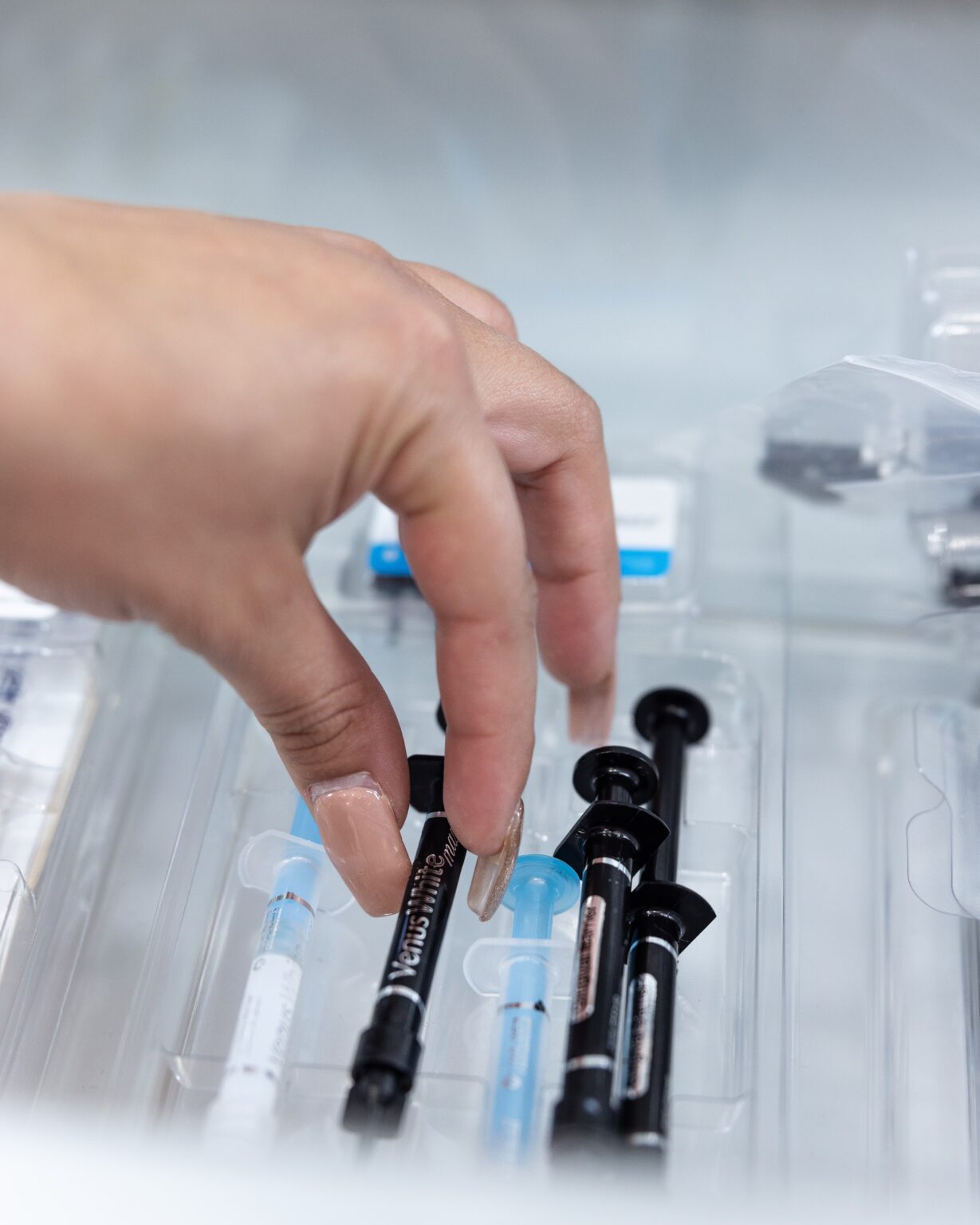
The appointment, start to finish
- Numbing gel firstA topical gel goes on the gum for a minute or two so you do not feel the needle. Then the anesthetic is delivered slowly. Injecting slowly is most of what makes it comfortable.
- Waiting until it worksSeveral minutes. We test it before starting, and we do not begin until you confirm you are numb. Say so if you are not; more can be given.
- Keeping the tooth dryComposite bonds only to a dry surface. A rubber dam or cotton isolation keeps saliva off and stops anything falling to the back of your throat. It is also why we ask you not to close.
- Removing the decayOnly the softened, infected tooth structure comes out. Healthy tooth is preserved. Every millimeter kept is strength retained. You feel vibration and hear the handpiece, but not pain.
- Bonding and layeringAn adhesive is applied, then the composite is placed in layers, each set with a blue curing light. Layering controls shrinkage, which is why one big lump is not the right way to do it.
- Shaping and checking your biteSculpted to match the tooth’s grooves, then you bite on colored paper so we can see any high spot and adjust it. Two minutes here saves weeks of an aching tooth.
- PolishingA smooth surface holds less plaque and feels right to your tongue.

The rest of the day, and the next few weeks
- Wait until the numbness wears off to eat. Two to three hours. Biting a numb lip or cheek is the most common thing that goes wrong afterwards, and it is entirely avoidable.
- A composite filling is fully set immediately. You can eat normally once you can feel your mouth.
- Cold sensitivity for a week or two is normal, particularly for a deep filling. It should be fading.
- If your bite feels high, come back. Do not wear it in. A filling a fraction too tall will make the tooth ache for months, and adjusting it takes minutes.
- Floss it from day one. The join between filling and tooth is exactly where new decay starts.
Will it hurt?
You should feel pressure and vibration, not pain. If you feel anything sharp, raise your hand and we stop and add more anesthetic. That is normal and it is not a failure.
What if I am terrified of needles?
Say so when you book. Topical gel, a slow technique and, if you want it, sedation ranging from mild to sleeping through it.
How long will I be numb?
Two to three hours typically, longer in the lower jaw. Avoid hot drinks and chewing until it has gone.
How long does a filling last?
A well-placed composite commonly lasts seven to ten years or more. Size matters most. Large fillings in heavy grinders fail soonest.
Can I drive afterwards?
After local anesthetic, yes. After sedation, no. You will need someone to take you home.
Why did I need an X-ray for a small filling?
Because decay between teeth is invisible to the eye, and knowing how close it is to the nerve changes how we approach it.
Book it in. It is a shorter appointment than you think
- (310) 860-6969Someone here answers.
- Request a visitWe will call to confirm.
- Pick a time onlineChoose your own slot.
What you will feel at each stage
Knowing the sequence takes most of the anxiety out of it.
The numbing. A topical gel first, then the injection given slowly. Going slowly is what makes it comfortable. A sting for a few seconds, then nothing. Five to ten minutes to take full effect, and we test before starting.
Removing the decay. Vibration and the sound of the handpiece, plus water spray and suction. No pain. This is the shortest part.
Placing the filling. The tooth is kept dry, the material placed in layers and set with a bright blue light. You will feel light pressure.
Checking the bite. You bite on colored paper and we adjust. Do this carefully even though you are numb, a filling left a fraction high causes days of ache, and thirty seconds now prevents it.

Aftercare, in order of how often it matters
- Do not eat while numb. The commonest post-filling injury is a bitten lip or cheek, especially in children. Wait two to four hours.
- Composite fillings are set hard immediately. You can eat as soon as sensation returns. There is no waiting period with tooth-colored material.
- Expect cold sensitivity for a few days up to a couple of weeks, particularly after a deep filling. It should be trending downward.
- If the bite feels off, come back. It is a two-minute adjustment and it will not settle by itself.
- Floss normally. If floss shreds or catches on the new filling, tell us, the contact needs smoothing.
Pain that lingers after heat, or throbbing that wakes you, is different. That suggests the nerve is not recovering and needs looking at.
Cost, insurance and the real economics
Cost depends on the size of the filling and how many surfaces of the tooth are involved, a small single-surface repair and one rebuilding three surfaces are different amounts of work.
Fillings are restorative rather than cosmetic, so dental plans typically cover a meaningful share. Some plans cover amalgam at a higher rate than tooth-colored material on back teeth and will pay the difference only up to the amalgam fee. We check your specific plan and tell you the out-of-pocket figure before we start, never after.
The economics that actually matter are about timing. A small filling caught at a check-up is one short visit. The same tooth left two years becomes a root canal and a crown. Several times the cost, several appointments, and a weaker tooth at the end of it.
Nothing in dentistry gets cheaper by waiting.