
Oral Appliance Therapy for Better Sleep in Beverly Hills, CA
Medically reviewed by Dr. Kayla Lebeau, DDS
Treating what your jaw does while you are asleep
A great deal happens in your mouth overnight that you have no awareness of. Jaws clench with far more force than they ever apply while you are awake. Airways narrow and collapse. And the first evidence is usually something else entirely, a headache every morning, a partner who cannot sleep next to you, teeth that keep chipping.
An oral appliance is a custom-made device worn at night. Depending on what it is treating, it either protects the teeth from grinding force or holds the lower jaw slightly forward to keep the airway open.
- WornAt night only
- Custom madeYes, from scans of your teeth
- Takes2 visits, then a review
- TreatsGrinding, snoring, mild apnea
Worth investigating if
- You wake with a sore jaw, temple headaches, or aching teeth
- Your teeth are flattening, chipping, or becoming sensitive at the necks
- You snore, or you have been told you stop breathing in your sleep
- You wake unrefreshed however long you sleep, or are sleepy during the day
- Your jaw clicks, locks, or is tender in front of the ear
- You cannot tolerate a CPAP machine
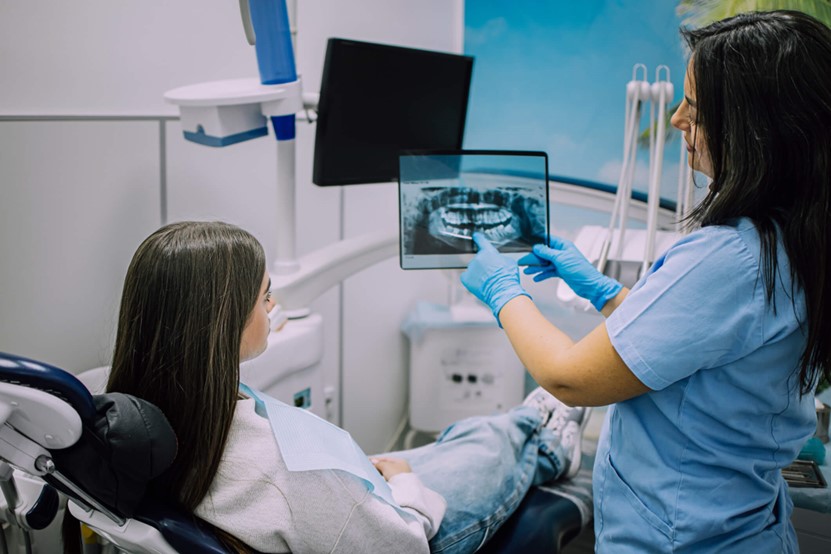
Two different appliances for two different problems
- For grinding and clenching. A hard acrylic guard that separates the teeth so the force lands on the appliance instead of on your enamel, crowns and veneers. See bruxism treatment.
- For snoring and sleep apnea. A mandibular advancement device, which holds the lower jaw slightly forward. That pulls the tongue base away from the back of the throat and keeps the airway open. See snoring and sleep apnea treatment.
They are not interchangeable, and a device bought online is neither. An appliance that does not fit precisely loads a few teeth heavily and can move them over months, which is a considerably more expensive problem than the one you were trying to solve.
- Working out the causeWear facets, muscle tenderness, jaw joint examination, and what you and your partner have noticed. Grinding and airway problems frequently occur together, and treating only one of them tends to disappoint.
- Medical referral where it is neededSuspected sleep apnea needs a sleep study and a physician’s diagnosis. We do not diagnose it, and we will not fit an appliance for it on suspicion alone. That is a boundary worth insisting on.
- Scans and recordsDigital scans of both arches, plus a record of how your jaw closes and, for an advancement device, how far it can comfortably come forward.
- FittingChecked for even contact across every tooth. Even contact is what makes it protective rather than damaging.
- Review and titrationFor snoring appliances the advancement is adjusted gradually over weeks to the point where symptoms resolve without straining the joint.
Living with an appliance
- Give it a few weeks. Extra saliva at first, and a jaw that feels slightly odd in the morning, are usual and settle.
- Morning jaw exercises help with an advancement device. We will show you a simple routine to reset the bite.
- Rinse cold and brush gently with soap, never toothpaste, and never hot water.
- Bring it to every check-up. We inspect it for wear and confirm your bite has not shifted.
- Tell us if a tooth starts feeling different. Small changes are easy to correct early and difficult later.
Will it stop me grinding?
No appliance stops the grinding itself. That is driven by sleep and stress. It protects your teeth from the force, which prevents the cracks, the wear and the sensitivity.
Does it really help snoring?
For most people who snore, and for mild to moderate sleep apnea, oral appliances are effective and well supported by evidence. For severe apnea, CPAP remains the more effective treatment, though an appliance is a reasonable option for people who genuinely cannot tolerate it.
Can it move my teeth?
A well-made, well-monitored appliance should not. Bite changes over time are the recognized risk with advancement devices, which is exactly why regular review is part of the treatment and not an optional extra.
Is it uncomfortable?
Strange for the first few nights, then most people stop noticing it. Persistent discomfort means it needs adjusting.
Do I need a sleep study first?
For snoring alone, not necessarily. For suspected sleep apnea, yes. It is a medical diagnosis, and treating it without one risks leaving a serious condition undertreated.
How long does one last?
Typically three to five years, less if you grind heavily. That wear tells us something useful about the force involved.
Find out what is happening while you sleep
- (310) 860-6969Someone here answers.
- Request a visitWe will call to confirm.
- Pick a time onlineChoose your own slot.
The honest case for an appliance
An oral appliance looks like a sports guard. It holds your lower jaw slightly forward while you sleep, which draws the tongue base away from the back of the throat and keeps the airway open.
Its strengths: nothing to plug in, silent, pocket-sized for travel, and no mask. That last point matters more than it sounds, the best treatment is the one that gets used every night, and compliance with appliances is consistently higher than with CPAP.
Its limits: for severe apnea it is less effective than CPAP, and CPAP remains first-line there. It needs enough healthy teeth to hold onto. And it is not something we can prescribe on our own judgment, a physician diagnoses sleep apnea from a sleep study; a dentist provides the appliance.
Side effects worth knowing: jaw and tooth soreness early on, extra saliva, and a slow change in the bite over years. We check for that at reviews, which is why an appliance is not a fit-and-forget device.