
Composite Bonding in Beverly Hills, CA
Composite bonding
Bonding is tooth-colored composite shaped directly onto your tooth and hardened with a light. It is the least invasive way to repair a chip, close a small gap or reshape an edge, and in most cases it is finished in one visit with no laboratory stage.
It is also the option we reach for before veneers, because almost nothing is removed. If your enamel is intact, bonding can usually be undone or replaced later. Veneers cannot.
- Usually takesOne visit, 30 to 60 minutes
- NumbingOften none needed
- Tooth removedLittle to none
- LifespanCommonly 5 to 8 years
Bonding is usually the right answer if
- You have chipped a front tooth and want it back the same day
- A small gap bothers you but you do not want aligners
- One tooth is a slightly different shape or shade than its neighbor
- You want to see a change before committing to anything permanent
- An old white filling at the front has stained at its edge
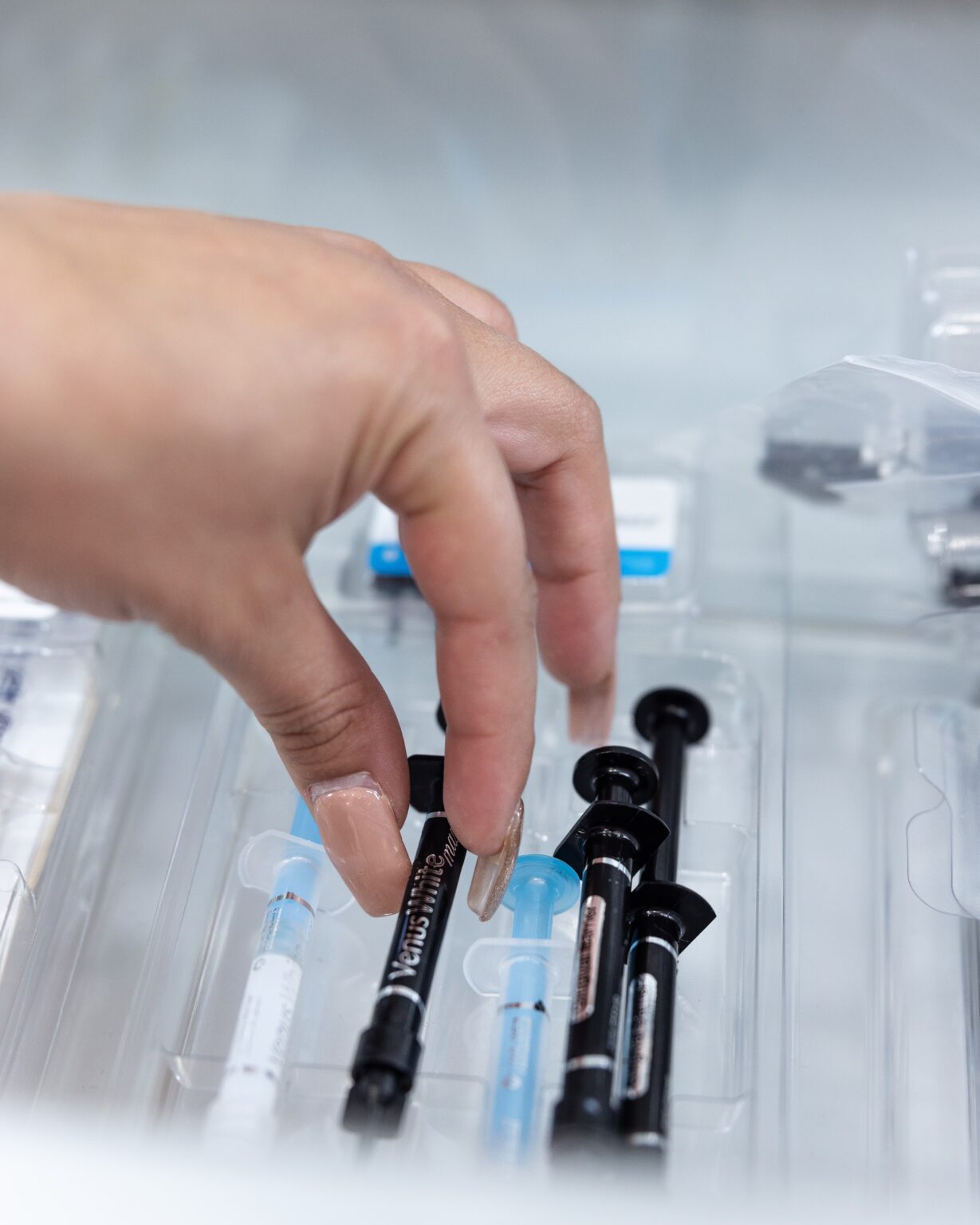
What the appointment involves
- Shade matchWe choose the composite against your own tooth in natural light. This is the step that decides whether the repair disappears or announces itself.
- Preparing the surfaceThe enamel is cleaned and lightly etched so the composite grips. In most cases nothing is drilled and no anesthetic is needed.
- Building the shapeThe composite is placed in thin layers and sculpted by hand, then hardened with a curing light. This is where the skill is: the contour and the edge, not the material.
- Shaping and polishingThe bite is checked, the edge refined and the surface polished until it reflects light the way enamel does.
Bonding, veneers or a crown
- Bonding. One visit, little or nothing removed, and reversible in practice. It stains over years and chips more easily than porcelain.
- Porcelain veneers. Longer lasting and far more stain resistant, but enamel is reduced and that part cannot be undone.
- A crown. Structural rather than cosmetic. If a tooth is cracked or mostly filling, bonding will not hold it together.
If bonding will do the job we will say so, even though it is the cheaper treatment.
Looking after it
- Composite stains where enamel does not. Coffee, tea, red wine and smoking all show at the margins first.
- It does not respond to whitening. Whiten first, then match the bonding to the lighter shade.
- Do not bite nails, pens or packaging with a bonded edge. That is how most of them chip.
- If you grind, wear a night guard. Grinding shortens the life of bonding considerably.
A case from our own practice
A chipped front tooth restored with composite bonding. The edge was rebuilt and the tooth brought back into proportion in one appointment, with no preparation and no waiting on a laboratory.
Does it hurt?
Usually there is nothing to numb, because nothing is drilled. If an old filling is being replaced underneath, local anesthetic is used.
How long does it last?
Commonly five to eight years on a front edge, less if you grind or bite hard objects. It is repaired or refreshed rather than replaced wholesale.
Will it match?
It should be invisible when the shade is chosen properly and the surface polished. Composite is slightly less translucent than enamel, which matters most on very thin edges.
Is it reversible?
In practice yes, where no enamel was removed. That is the main reason to try bonding before veneers.
What does it cost?
Considerably less than a veneer, priced per tooth. You get the figure in writing before we start. Cosmetic bonding is not usually covered by insurance, though a bonded repair after damage sometimes is.
Book a consultation
- (310) 860-6969Someone here answers.
- Request a visitWe will call to confirm.
- Pick a time onlineChoose your own slot.
What crowns are made from
The material is chosen for where the tooth sits and how hard you bite, not for preference. Back teeth take the force; front teeth are judged on appearance. Here is the honest trade-off for each.
All-ceramic and all-porcelain
The closest match to a natural tooth, because light passes through the material the way it does through enamel. Our default for anything that shows when you smile, and the option for anyone with a metal sensitivity. Modern ceramics are strong, though a heavy grinding habit still argues for something tougher at the back.
Zirconia
The toughest tooth-colored option, which makes it the usual answer for molars and for patients who grind. Slightly less translucent than porcelain, so it is chosen for strength first. It can be layered at the front edge where appearance matters.
Porcelain fused to metal
A metal core for strength with porcelain over the top. Reliable and long-serving, but the porcelain can chip off the metal over the years, and a dark line can appear at the gum as gums recede. We use it less than we used to, for those reasons.
Gold and other metals
The longest-lasting material we have, and the kindest to the opposing tooth because it wears at a similar rate. It is unmistakably metal, so it is a back-tooth option. Some patients specifically ask for it and they are not wrong to.
Temporary crowns
Acrylic or resin, made to protect the tooth for the two to three weeks while the permanent crown is built. They are meant to come off, so treat them gently and avoid anything sticky. They are not a cheaper permanent option.