
Zygomatic Dental Implants
Medically reviewed by Dr. Jonathan Peri, DDS, MD
Implants when the upper jaw has run out of bone
When upper back teeth have been missing for years, the bone above them thins and the sinus expands downward into the space. Eventually there is not enough left to hold a standard implant, and people are told they are not a candidate.
A zygomatic implant answers that by anchoring somewhere else entirely: the cheekbone. The zygoma is dense, it does not resorb the way the jaw does, and it is still there when the upper jaw is not. The implant is longer than a conventional one and passes up into that bone, giving a fixed upper arch without years of grafting and sinus surgery first.
This is advanced surgery. It is planned in detail, it is not right for everyone, and anyone who offers it to you without a 3D scan is guessing.
- ForSevere upper jaw bone loss
- Anchored inThe cheekbone, not the jaw
- AvoidsGrafting and sinus lifts
- Fixed teethOften the same day
This may be the route if
- You have been told there is not enough upper bone for implants
- You have already been through failed grafts or a failed sinus lift
- Your upper denture will not stay in no matter what is tried
- You have severe resorption after long-term denture wear
- You want fixed upper teeth and have been told it is not possible
How it is planned and placed
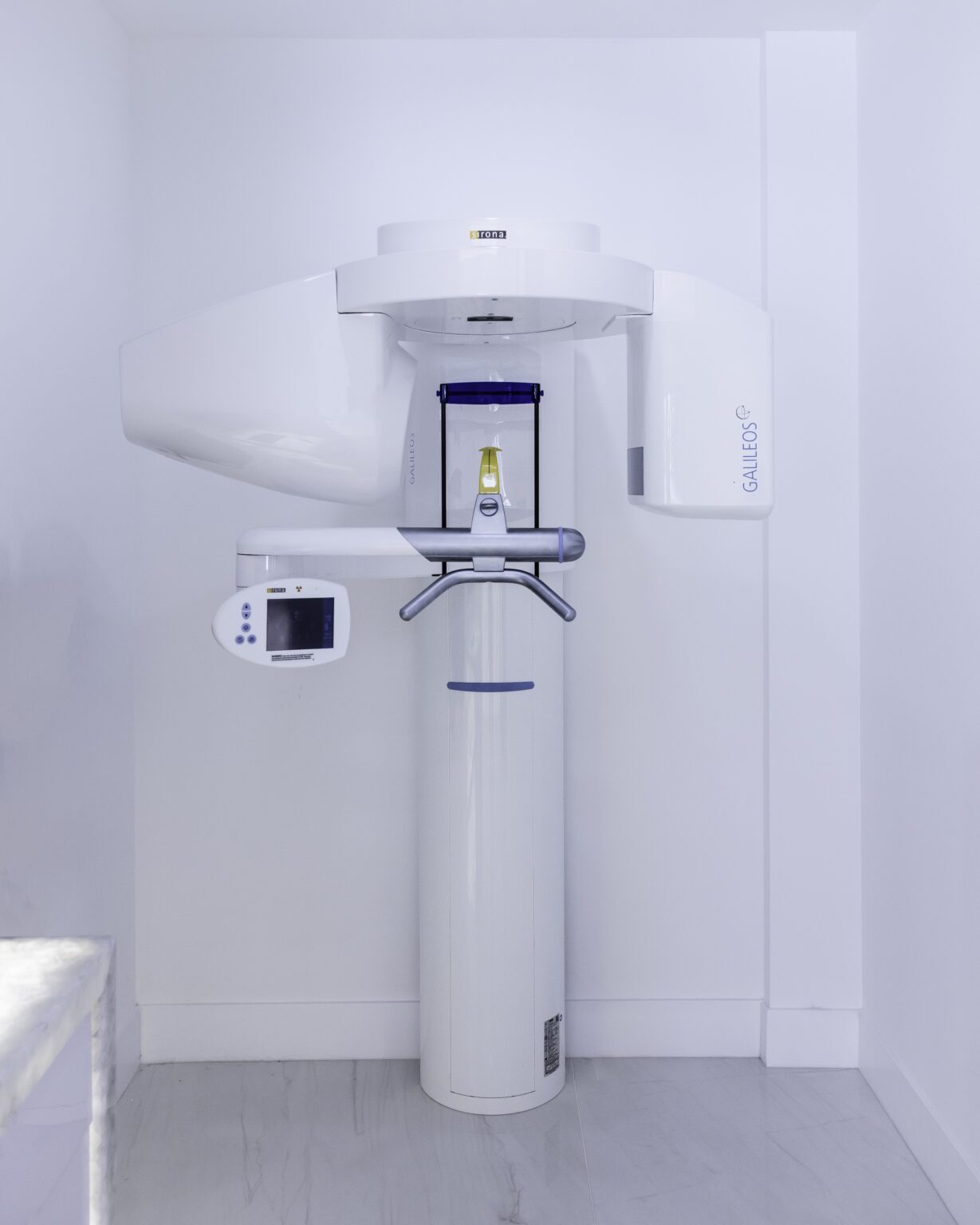
- 3D imaging firstA CBCT scan is not optional here. The path of the implant, the sinus wall and the cheekbone anatomy are mapped before any decision is made about whether this is even appropriate for you.
- A frank assessmentSometimes the scan shows that conventional implants with a graft will work perfectly well, and that is a smaller procedure. We would rather tell you that than perform the bigger one.
- SurgeryUsually two zygomatic implants, often combined with conventional implants at the front where bone remains. Done under sedation or general anesthesia given the length and nature of the procedure.
- A fixed temporary bridgeIn most cases teeth are attached the same day, because zygomatic implants engage dense bone and are stable immediately.
- Healing and the final bridgeSeveral months of healing before the definitive bridge is made. Reviews throughout, and a hygiene plan built around the design.

What recovery is honestly like
This is more than a routine implant. Expect facial swelling and bruising for a week or so, some soreness around the cheek, and a soft diet for several weeks. Sinus congestion on the treated side is common in the early days and usually settles.
- Take the full course of any antibiotics prescribed, and use the rinses as directed.
- Sleep propped up for the first few nights to reduce swelling.
- No smoking. Of all the things that raise the failure rate of implant surgery, this is the one you control.
- Do not blow your nose forcefully in the first weeks, the pressure can disturb the surgical site.
- Keep every review appointment. Long-term success here depends on maintenance more than on the surgery.
Is it safe?
In trained hands and with proper 3D planning, zygomatic implants have a long clinical track record for exactly this problem. The risks are real and specific, sinus involvement in particular, which is why the scan and the assessment come first.
Why not just have a bone graft?
You may be able to. Grafting the upper back jaw means a sinus lift, months of healing and then implants on top, and it does not always take. The zygomatic route avoids that in appropriate cases. Which is better depends on your scan.
Will I have teeth straight away?
Usually yes, a fixed temporary bridge on the day of surgery, because these implants are stable immediately in dense bone.
Does it affect my sinuses long term?
Some congestion is common early on. Persistent sinus problems are uncommon when the case is planned and placed properly, and it is one of the things reviews are checking for.
How long do they last?
Published outcomes at ten years and beyond are strong. As with any implant, cleaning and regular maintenance are what protect that.
Am I too old for this?
Age itself is rarely the barrier. General health, healing capacity and medications matter far more, and we assess those individually.
Start with the scan that tells us if it is possible
- (310) 860-6969Someone here answers.
- Request a visitWe will call to confirm.
- Pick a time onlineChoose your own slot.
Who zygomatic implants are actually for
This is a solution to one specific problem: an upper jaw with too little bone to hold conventional implants, where the alternative would be extensive grafting, or being told nothing can be done.
Instead of anchoring in the upper jaw, these longer implants anchor in the cheekbone, the zygoma, which is dense and reliably present even when the jaw has resorbed severely. That is usually after years in an upper denture, or after significant bone loss from advanced gum disease.
The honest picture: this is more involved surgery than standard implant placement, performed under sedation or general anesthetic, and it demands considerable experience. Published success rates are high, and the complications, sinus problems chief among them, are more consequential than with routine implants. Planning is done entirely from a CT scan.
The advantage that matters to patients: it typically avoids months of bone grafting, and fixed teeth are often placed within days rather than after a year of staged surgery.
If you have enough bone for All-on-4, that is the simpler answer and we will say so.